
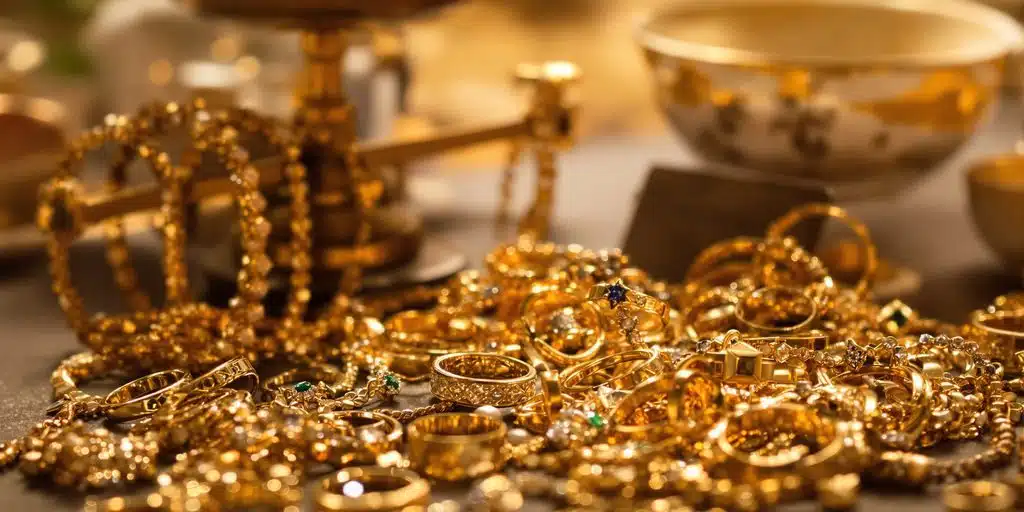
Do you have a piece of gold jewelry lying around in a drawer and are wondering what it's worth? That's an excellent question, especially with the fluctuating price of gold. Knowing how to calculate the gold value of your jewelry is essential to ensure you get a good deal, whether you're selling it or simply out of curiosity. Don't worry, it's not rocket science! Let's take a look at the steps together to help you understand.
Key Points for Evaluating Your Gold Jewelry
- Understanding the purity of your gold is the first step: identify the karatage of your jewelry to know how much fine gold it actually contains.
- Professionals use methods such as the acid test or spectrometer to determine the exact gold content, a crucial step for a fair assessment.
- Don't neglect other factors that influence value, such as the presence of precious stones, the general condition of the jewelry, or its provenance and era.
- The price of gold is a dynamic element: knowing the spot price and monitoring its variations will help you better estimate the current value of your property.
- To get the best price, compare offers from different buyers and find out about any applicable resale taxes.
Understanding the Purity of Gold in Your Jewelry
To properly assess the value of your gold jewelry, it's essential to understand the concept of gold purity. Just because a piece of jewelry is gold-plated doesn't mean it's made entirely of pure gold. In fact, pure gold is quite soft and easily deformed, which is why it's usually mixed with other metals, such as copper, silver, or zinc, to make it stronger and more durable. This mixture is called an alloy.
Identify the karatage of your jewelry
Karat, often indicated by the letter 'k' or 'kt', is the unit used to measure the purity of gold. Pure gold is considered 24 karats (24k). The lower the number, the less pure the gold. For example, a piece of jewelry marked 18 karat contains 18 parts gold to 6 parts other metals, which is 75% pure gold. It is important not to confuse karat (the unit of purity for gold) with carat (the unit of weight for gemstones).
Here is a table that summarizes the different gold titles:
| Karatage (k) | Fineness (parts per thousand) | Purity (percentage) |
|---|---|---|
| 24 k | 999 | 99.9% |
| 22 k | 916 | 91.6% |
| 18 k | 750 | 75.0% |
| 14 k | 583 | 58.3% |
| 10 k | 416 | 41.6% |
| 9k | 375 | 37.5% |
Understanding the different grades of gold
The most common gold grades you'll find on your jewelry are 9 karat, 14 karat, 18 karat, and 24 karat. 24 karat gold is pure gold, but it's rarely used for jewelry because it's too malleable. 18 karat gold (also called 750/14 gold) is very popular in Europe because it offers a good balance between purity and strength. 585 karat gold (9/375) is more common in the United States, and XNUMX karat gold (XNUMX/XNUMX) is often used for more affordable jewelry.
You should also be careful with jewelry that is simply gold-plated or gold-filled. In these cases, only a thin layer of gold covers another metal. The value of these pieces of jewelry is therefore much lower than that of solid gold jewelry. Jewelry marked "GF" or "Gold Filled" is not solid gold.
The Importance of Purity for Value
Gold purity is the most important factor in determining the intrinsic value of your jewelry. The higher the percentage of fine gold, the more valuable the jewelry will be, based on the gold price. For example, an 18-karat gold ring will be worth more than a 14-karat gold ring of the same weight because it contains more pure gold. This is why it is essential to correctly identify the fineness of your jewelry before seeking an appraisal. Knowing how to recognize the hallmark on your jewelry is a first step.
It is crucial to distinguish between solid gold and plated or filled gold. Only solid gold, whose purity is indicated in carats, will be valued based on its weight in fine gold and the current price of the precious metal.
Professional gold valuation methods
To know exactly what the gold in your jewelry is worth, you need to go through a few evaluation steps. Professionals use very specific methods for this. It's a bit like a diagnosis for your jewelry.
The Acid Test and the Touchstone
This is a fairly standard method. Basically, you rub your jewelry on a special stone, called a touchstone. This leaves a small trace of gold on the stone. Then, you apply a few drops of different acids. Each acid reacts differently depending on the purity of the gold. If your jewelry is 18-karat gold, it will react in one way, and if it's 14-karat, it will react differently. It's quite visual and gives a good idea of the gold content. It's a technique that requires a bit of know-how, but it's fairly reliable for a first estimate.
The use of the X-ray fluorescence spectrometer
This is where we take the technology up a notch. Some professionals have devices called X-ray fluorescence spectrometers. These are a little more high-tech. The device beams X-rays at your jewelry and analyzes the chemical composition of the metal. It can tell you with great accuracy what percentage of gold there is, as well as what other metals are present. It's really very accurate, and it gives reliable results on the exact gold content. If you're offered a test with this device, it's a pretty good sign for the transparency of the assessment.
Accurate weighing and final calculation
Once you know how pure your gold is, you need to weigh it. And not just any old way; you need a precision scale. The weight is measured to determine the exact amount of fine gold in your jewelry. Then, the professional makes the final calculation. They take the weight of fine gold, multiply it by the current gold price, and then apply their margin. This margin covers refining and management costs, as well as their profit. That's why it's always advisable to compare several offers, as these margins can vary from one place to another. You can consult the spot gold price to get an idea of the base value.
It's important to understand that these methods aim to determine the intrinsic value of the gold contained in your jewelry. Other factors, such as gemstones or brand, can influence the total price, but professional appraisal focuses primarily on the precious metal itself.
Factors influencing the value of your gold jewelry
Beyond the simple weight and purity of the gold, several other elements can influence the value of your jewelry. It is therefore important not to overlook these when evaluating your jewelry.
The impact of gemstones and pearls
If your jewelry is adorned with precious stones or pearls, their presence can significantly increase the overall value. It's no longer just the value of the gold, but also that of the gems themselves. To properly assess these elements, you must first try to identify their nature. For example, for a diamond, certain indicators such as its hardness, the way it reflects light, its coldness to the touch, or even the speed with which fog evaporates on its surface can give you clues. However, for an accurate estimate of a stone's value, the opinion of a professional gemologist is essential. They are the only ones who can determine with certainty whether it is an authentic stone and what its quality (cut, color, clarity, weight) is.
The importance of condition and originality
The condition of your jewelry plays a significant role. A piece of jewelry in good condition, without deep scratches, deformations, or missing pieces, will naturally be more valuable than a damaged piece. The originality of the design and the quality of the workmanship are also factors to consider. A unique piece of jewelry, created by a renowned craftsman or representing a particular style, can be worth more than mass-produced jewelry. Think about the story your jewelry tells: is it antique? Does it have a particular provenance? These aspects can sometimes transform a simple object into a collector's item.
The jeweler's fame and the time of creation
The brand or name of the jeweler who created the piece can also have an impact on its value. Creations from renowned jewelry houses are often more sought-after and therefore more valuable, even if the weight of gold remains the same. Similarly, the era in which the piece was made can influence its price. Pieces from specific periods, such as Art Deco or Victorian style, may be of interest to collectors and history buffs, which can increase their value beyond that of the precious metal they contain. Therefore, jewelry should be viewed not only as a raw material, but also as an object of art and history.
The price of gold: a key element for the calculation
The price of gold is a bit like the weather for your jewelry: it changes all the time and directly influences its value.
Understanding the spot price of gold
The spot price is the current value of gold on global markets. Think of it as the market price for one ounce of pure gold (approximately 31,1 grams). This price fluctuates constantly, influenced by a variety of factors: the state of the global economy, central bank decisions, demand from jewelers or investors, and even geopolitical events. To get an accurate picture, you need to look at reliable sources that provide real-time price information.
The role of fixing and continuous pricing
There are basically two ways to track the gold price :
- The fixing: It's kind of
Calculate the intrinsic value of your jewelry
Now that you have an idea of the purity of your gold and the current price, it's time to move on to calculating the intrinsic value of your jewelry. This is where things get a little more concrete.
Determine the net weight of fine gold
The first step, and it's a crucial one, is to know how much pure gold is actually in your jewelry. Remember, jewelry is rarely made of 100% pure gold. It contains alloys to make it stronger or change its color. Therefore, you need to isolate the weight of the fine gold.
To do this, you need to know the total weight of your jewelry and its fineness (expressed in carats or thousandths). If your jewelry weighs 10 grams and is made of 18-carat gold (which corresponds to 750 thousandths, or 75% pure gold), the calculation is simple: 10 grams * 0.75 = 7.5 grams of fine gold.
Here is a small table to help you convert karats to percentage of pure gold:
| Carats | Percentage of pure gold |
|---|---|
| 24 carats | 99.9% (Pure Gold) |
| 22 carats | 91.7% |
| 18 carats | 75% |
| 14 carats | 58.3% |
| 10 carats | 41.7% |
You should also consider removing the weight of any gemstones or other non-gold items. If you don't have a precision scale, a visit to a jeweler to weigh your jewelry is a good idea.
Apply today's gold price
Once you have the net weight of fine gold in grams, simply multiply it by the current gold price. This price, as we have seen, fluctuates constantly. It is usually expressed in euros per gram or per ounce. Make sure you use the most recent price possible.
For example, if the price of gold is €60 per gram and you have determined that your jewelry contains 7.5 grams of fine gold, the intrinsic value of the gold in your jewelry is 7.5g * €60/g = €450.
Remember that this value is purely that of the metal. It does not take into account the jeweler's workmanship, the brand, the condition of the jewelry, or its historical or artistic value.
Take into account processing and commission costs
This is an often overlooked point. When you sell gold, whether to an individual or a professional, there are often associated costs. Professional gold buyers, for example, must cover their costs: they pay staff, rent, electricity, and they also need to make a margin to survive. These costs often translate into a percentage deducted from the calculated value.
For example, a buyer might offer to buy back your gold at 90% of its calculated intrinsic value, to cover their fees and margin. It's important to know, then, that the amount you receive will likely be less than the gross value of the gold.
Here are some points to keep in mind:
- Gross Weight vs Net Weight: Always aim for the weight of fine gold.
- Today's course: Use a reliable and up-to-date course.
- Hidden costs: Ask about commissions or deductions before selling.
Compare offers to sell your gold at the best price
Once you have a clear idea of your gold's value, the next step is to make sure you sell it for the best possible price. You should never rush into buying the first offer you come across, as differences, even small ones per gram, can add up to a significant sum in the end. Think about it: a few cents more per gram over several dozen grams can quickly add up to a significant difference.
Here are some tips for comparing offers:
- Have your gold appraised by several professionals. Don't hesitate to request quotes from at least two or three different buyers. Valuation methods and margins can vary considerably from location to location.
- Watch the price of gold. The price of gold fluctuates constantly. If you can sell when the price is particularly high, you will maximize your profit. Keep an eye on market trends, and if a rise is forecast, it may be wise to wait a while.
- Learn about taxation. Depending on your situation and the type of gold you're selling (jewelry, coins, or bars), the sale may be subject to taxes. Understanding the applicable tax rules will help you avoid unpleasant surprises and calculate your net profit.
It's also important to know that buyback prices are not the same as sale prices. Comparing your jewelry to similar items sold in stores is therefore not a reliable valuation method for selling. Jewelers may have an incentive to undervalue your gold to make a higher margin if they resell or remelt it.
The trick is to seek out professionals whose job is to evaluate and buy gold, not to resell jewelry. They will be more impartial in their assessment.
Looking to sell your gold and get the best price? It's important to do the right thing. compare the different options availableEach location may offer different rates for your gold. To make sure you're getting a good deal, take a look at our website where we help you find the best deals.
To sum up: your gold has value, and now you know how to find it.
There you have it, you now have all the information you need to estimate the value of your gold jewelry. Remember that the price of gold changes daily, so keep an eye on it! Weigh your pieces carefully, check their purity if possible, and don't hesitate to ask for several professional opinions. This is the best way to ensure you get a fair price for your treasures. Happy appraising!
Frequently Asked Questions
How do I know if my jewelry is really gold?
To find out if your jewelry is gold, look for a small symbol called a hallmark. For 18-karat gold, it's often an eagle's head. If you're not sure, a professional can check it for you.
When is the best time to sell my gold?
The best time to sell your gold is when its price is rising. You need to monitor the market and try to sell when the price is as high as possible.
Should I melt my jewelry before selling it?
No, it's not necessary to melt down your jewelry. Experts can appraise it as is. Sometimes, melting it down can even lower its value, especially if it has artistic or collectible value.
Does the price I am offered always include VAT?
VAT isn't always applied in the same way. It depends on whether it's gold for investment or gold for jewelry. You should check with the seller.
Can I negotiate the price I am offered for my gold?
You can try to negotiate, especially if you've looked at prices elsewhere. But don't get your hopes up too high, because the base price is set by the official gold price, and the margins for negotiation are often limited.
How do I calculate the value of my gold jewelry?
To estimate the value of your jewelry, you first need to look at the purity of the gold (its 'quality' in carats) and its weight. Then, you need to know the price of gold on the day of the purchase. Don't forget that precious stones can also add value.

The Secrets to Investing in Gold
Download your guide to investing in Gold
Download the ultimate guide to investing in gold for free. Discover all our experts' secrets for investing and protecting your assets with gold.
