

Wondering what the current trends are in the gold market? That's a great question, especially with all the economic and geopolitical fluctuations we're experiencing. Gold has always had this ability to attract attention, whether for its beauty or its role in our economies. We're going to take a look at what's happening right now in this fascinating market, discussing the reasons for its popularity and what experts have to say about it in the coming months. Get ready, because the yellow metal has more than enough surprises in store!
Key Takeaways
- Gold remains a strong safe haven in the face of global economic uncertainty, attracting central banks and investors seeking protection against inflation.
- Central bank monetary policies, geopolitical tensions and public debt are major factors that directly influence the current price of gold.
- Technical analysis shows a bullish trend for gold, although short-term corrections are possible, with support and resistance levels to watch closely.
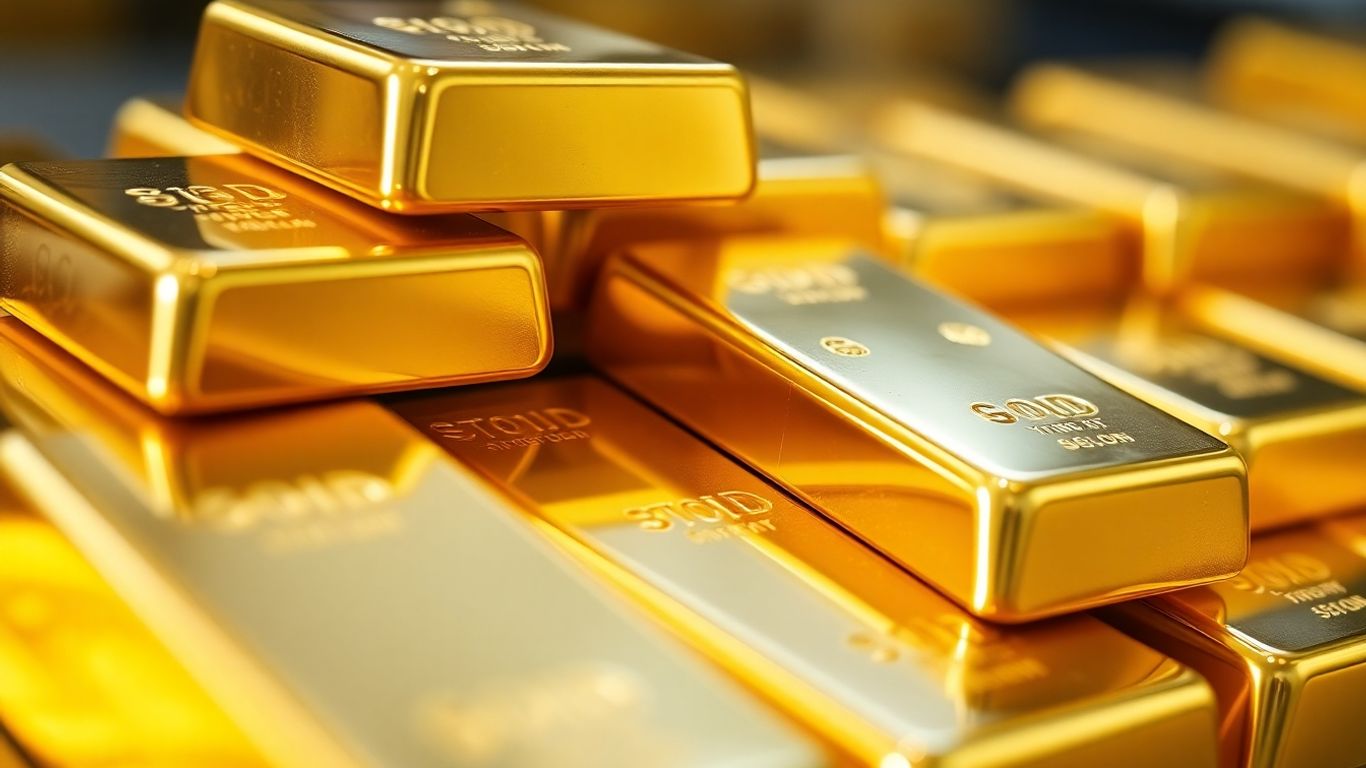
- Gold bars, particularly in 50g, 250g and 500g sizes, are preferred investment options due to their accessibility, flexibility and potential for appreciation.
- Investment coins like the Napoleon 20 Francs Gold or American coins, as well as silver, offer interesting alternatives for diversifying your assets.
Gold, a safe haven in the face of economic uncertainty
With the global economy in turmoil, you might be wondering why gold continues to fascinate investors so much. Well, it's simple: gold is seen as a safe haven. When financial markets falter, inflation rises, or geopolitical tensions escalate, many turn to the yellow metal to secure their wealth. It's a bit like having comprehensive insurance for your money.
Central banks and their role in monetary stability
Did you know that central banks—the institutions that manage a country's monetary policy—hold enormous amounts of gold? In the United States, for example, the New York Federal Reserve holds a significant portion of the world's reserves. As of December 2003, it was estimated that central banks held about a quarter of the world's gold stock, or more than 28 tons. This gold isn't just there for show; it serves as a pillar of monetary stability. It reinforces a currency's credibility and helps maintain a country's financial balance on the international stage. Basically, when a central bank buys or sells gold, it can have an impact on the value of currencies.
Gold as a hedge against inflation and volatility
Inflation is that little thing that eats away at the purchasing power of your money. When prices rise, your money is worth less. Historically, gold has often proven itself as a counter to this effect. During periods when money loses value, the gold price tends to rise. It's almost as if, when the dollar loses its power, gold gains it. Moreover, in the face of volatile stock markets, where stocks can fall as quickly as they rise, gold offers relative stability. It doesn't generate income like stocks (no dividends, for example), but it's there to preserve your capital when everything else falters.
The perception of gold as a strategic asset
Beyond simple protection against inflation or volatility, gold is seen as a strategic asset. Think of major powers accumulating bullion, or investors diversifying their portfolios with this metal. Its recognition is global, which makes it very liquid: you can buy and sell it quite easily. It's a bit like holding a universal currency. Its value doesn't depend on the decisions of a single government or bank. It's this independence that makes it a strategic choice, especially when economic or geopolitical news is less than reassuring. For example, geopolitical tensions, such as conflicts or threats of war, often increase demand for gold, as investors seek shelter from uncertainty.
Factors influencing the current price of gold
Wondering what drives the price of gold? It's a bit like trying to understand the weather; there are a lot of factors that come into play. Let's take a look at this together.
The impact of public debt on gold demand
When governments borrow a lot, it can make investors a little nervous. If a country's debt becomes too high, there's a risk it might struggle to repay. In times like these, gold is often seen as a safe haven. People think, "Better to have gold than money that might not be repaid." So, when government debt increases, demand for gold tends to rise too, which drives up its price. It's a bit like insurance for your money.
Monetary policies and their correlation with the price of gold
Decisions by central banks, such as the US Federal Reserve (the Fed) or the European Central Bank (ECB), have a direct impact on the price of gold. When they lower their interest rates, it makes gold more attractive. Why? Because gold doesn't pay interest, unlike bonds, for example. If interest rates are low, other investments pay less, so gold becomes a more attractive option for those looking to invest their money. Conversely, if rates rise, gold can become less attractive. Expectations of rate cuts, for example, can already drive up the price of gold even before the decision is made. It's a bit of a constant game of anticipation.
The influence of geopolitical tensions on the gold market
Global events, such as conflicts or political instability, also play an important role. When there are geopolitical tensions, the world becomes more uncertain. Investors tend to turn to assets considered safe, and gold is one of them. It's what's known as a "safe haven." In times of crisis or high uncertainty, demand for gold often increases, which drives up its price. Sometimes, even if economic data isn't bad, concerns about the international situation can be enough to drive up the price of gold. It's a bit like gold serving as a thermometer for global fear.
Technical Analysis and Outlook for the Gold Market
To fully understand where the price of gold is headed, we need to look at technical analysis. It's a bit like a navigator reading a star chart. We look for markers, signals that tell us whether the wind is favorable or whether we should prepare for a storm.
Understanding Trend Lines and Support Levels
When you look at a gold price chart, you see lines that go up, down, or remain stable. These lines are trends. An uptrend is when the price tends to rise over time. A downtrend is the opposite. There are also times when the price stagnates; this is called consolidation. You need to know how to spot these trends to anticipate future movements. Support levels are prices below which gold has difficulty falling. It's like a floor. If the price approaches this floor, buyers often enter the market, which can cause the price to rise. Conversely, resistance levels are prices above which gold has difficulty rising. It's like a ceiling. If the price reaches a resistance level, it may have difficulty breaking through it and fall back down a little. Identifying these key levels is essential to knowing when to buy or sell.
The Importance of Real Yields in Gold Valuation
Real return is a bit like the return you get on an investment, once you've taken out the effect of inflation. If inflation is very high, even if the interest rate is correct, your purchasing power doesn't really increase. Gold, on the other hand, doesn't pay interest. So, when real returns are low, or even negative, gold becomes more attractive. Why? Because you don't lose purchasing power by holding it, while other investments that yield little after inflation don't earn you much either. When interest rates fall, it makes gold more attractive. It's a bit like the missed opportunity to make money with interest rates pushes you to look elsewhere, and gold is often that alternative. It's a bit like the game of communicating vessels between different types of investments.
Short and medium term price forecasts
So, what can we expect in the coming months? Analysts are paying close attention to what central banks are doing, particularly the US Federal Reserve (the Fed). If the Fed suggests it will lower interest rates, this tends to support the price of gold. The latest economic data, such as employment or inflation, are closely scrutinized. For example, if employment figures show a slowdown, this may encourage the Fed to lower rates, which is good for gold. Conversely, inflation that starts to rise again could complicate things. Geopolitical tensions also play a role. When the world is a little unsettled, people tend to turn to gold as a safe haven. Therefore, it is important to follow economic and political news closely to try to guess the direction the gold price will take. We can expect some volatility, especially around important central bank announcements. It is always a good idea to consult market analyses to get an idea of the current trends and possible scenarios.
Preferred investment formats in the gold market
When we talk about investing in gold, we often think of large bars, but there are plenty of different sizes to suit your budget and goals. It's a bit like choosing the right size shoes; they have to fit perfectly.
The 50g gold bar: accessibility and flexibility
If you're just starting out or prefer not to tie up too much money at once, the 50-gram bar is really good. It's a good way to start building your gold wealth without breaking the bank. You can buy one every now and then, much like you save for a vacation. It's fairly easy to store, whether at home in a safe or at the bank. Plus, if you ever need to sell some of your gold, it's easier to sell a small bar than to have to cut a large one. It's really handy for adjusting your strategy as you go. Think of it as a first step, a way to test the waters.
The 250g gold bar: a balanced investment
The 250-gram bar is a bit of a happy medium. It's larger than the 50g, which means the price per gram is often a bit more attractive. It's a good choice if you already have a rough idea of what you want to do with your silver and are looking to build a more solid store of value. It's still manageable enough for storage and resale, while representing a more significant investment amount. It's a bit like moving on to the main course after the appetizer; you're committing a bit more, but the return is more substantial. It's a format that appeals to those who want a tangible investment without having to manage huge quantities.
The 500g gold bar: a pillar of modern finance
Here, we take it up a notch. The 500-gram bar is already a beautiful object, a true symbol of wealth and security. It's the kind of format we often see among more experienced investors or those who really want to secure a significant portion of their assets. The price per gram is generally even more advantageous than with smaller formats, which makes sense. Just keep in mind that storage becomes a little more important, and if you need to resell part of it, you may have to go through a professional to melt it down or sell it all. It's an investment that shows you take your financial future seriously, a bit like buying a house rather than an apartment. It's a solid choice for those who are looking for the long term and looking to diversify their portfolio with a globally recognized asset. Gold remains a safe bet, and holding physical bars is a concrete way to protect yourself against economic uncertainties. That's why it's important to choose the right format, based on your own needs and your investment vision. Consider diversifying your purchases to smooth out risks; this is a strategy often recommended by experts. optimize your gold investment.
Here is a small table to help you visualize the differences:
| Ingot format | Main advantages |
|---|---|
| 50g | Accessibility, flexibility, easy storage |
| 250g | Good price/gram balance, more substantial investment |
| 500g | Attractive price per gram, significant investment, solid safe haven |
Gold and investment coins: a winning combination
When we talk about investing in gold, we often think of bullion, and that's understandable. But we shouldn't forget gold coins. They have a history, intrinsic value, and can even have additional appeal for collectors. It's a bit like having a tangible asset that tells a story.
The Napoleon 20 Francs Gold: a strategic choice
Ah, the Napoleon! It's a super-famous French coin, minted between 1803 and 1914, and even re-minted later. It depicts Marianne, a symbol of the Republic, and the Gallic rooster. It's truly a piece of French history in your hand. The great thing about this coin is that it's in high demand in France, which makes it easy to resell. Plus, it's not subject to VAT when purchased, and the tax regime when reselling is quite favorable. It's a bit like the gold investor's Swiss Army knife.
- Strong national symbol : Marianne and the rooster, it’s very French.
- High liquidity : Easy to buy and sell, especially in France.
- Interesting taxation : Less taxes on resale.
- Quality / price ratio : Often more affordable than other parts.
The 20 Francs Marianne Coq is a coin that has endured through the ages, retaining its value and appeal. It's a solid choice for those looking to diversify their assets with a tangible, historical asset.
American gold coins as a safe bet
If you look at the United States, there are also coins worth checking out. Take, for example, the 10 Dollar US Eagle Indian Head. It was minted between 1907 and 1933, and its design is truly beautiful. It is also highly sought after by collectors, which can add a premium to its intrinsic value. Like the Napoleon, it is recognized worldwide, making it easy to resell. It's a way to add a touch of American history to your gold portfolio.
- Historical design : A monetary work of art.
- Numismatic appeal : Appreciated by collectors.
- International liquidity : Easy to exchange anywhere.
- Safe investment : Gold is gold, no matter the coin.
The numismatic appeal of limited gold coins
Beyond common bullion coins, there are also coins whose rarity increases their value. Sometimes, a limited edition or a coin with a particular vintage can have numismatic appeal. This is where collectors and investors meet. For example, certain versions of the $20 US Double Eagle Saint-Gaudens, minted between 1907 and 1933, can command a significant premium. It's important to do your research, as value comes not only from the gold weight, but also from the coin's history and rarity. It's a bit more complex, but it can be very profitable if you know where to look.
- Scarcity : Limited editions or specific vintages may increase in value.
- History and Design : These elements add a cultural and aesthetic dimension.
- Numismatic bonus : The value can go beyond the simple price of gold.
- Diversification : Allows you to get off the beaten track of classic investment.
Silver, a metal with many facets
You know, silver isn't just a shiny metal we use to make jewelry or coins. It has a super long history, truly rooted in our civilizations. Since Antiquity, it's been used for everything and anything: to mint coins in Greece, for trade in Asia and Europe in the Middle Ages, and even to build up the treasuries of kings. Unlike gold, which was rather reserved for the rich, silver was the metal of the people, that of merchants and explorers. It has even served as the basis for many currencies over the centuries.
The dual industrial and financial dimension of money
Today, silver is a bit like the Swiss Army knife of precious metals. On the one hand, it remains a safe haven, a bit like gold, to protect your savings during economic downturns. But on the other hand, it has become incredibly important in many industries. Think of everything related to new technologies: solar panels, electronics, even in the healthcare field, silver is indispensable. It's this dual role, both financial and industrial, that makes it particularly interesting.
Growing demand for renewable energy
And let's talk about this industrial demand. With the energy transition, silver is in increasing demand. It's a key component in the manufacture of solar panels, for example. The more we move towards green energy, the more demand for silver is likely to increase. It's a bit of a bet on the future, you see? Investing in silver also means betting on the development of these new technologies.
Accessibility and liquidity of silver bullion
The great thing about silver is that it's more affordable than gold. You can start investing in silver bars without having to spend a fortune. Plus, it's fairly easy to resell, whether to professionals or even individuals. Silver bars, especially those certified by recognized smelters like the LBMA, are accepted all over the world. It's a bit like having an international currency in your pocket, but made of precious metal. It's an easy way to diversify your assets, especially if you're new to investing in precious metals.
Silver is a bit like gold's lesser-known but equally solid cousin. It has a rich history and a promising future, especially with the rise of green technologies.
Silver, that shiny metal, isn't just pretty to look at. It has many different uses, a bit like a Swiss Army knife! It's found in our jewelry, but also in more technical items. It's fascinating to see how it can be both a luxury item and a useful element. Want to learn more about this precious metal and how it can be useful to you? Come discover all its facets on our website !
So, what can we learn from all this?
So, that's it, we've covered the current trends in the gold market. We've seen that the yellow metal remains a safe bet, especially when things get a bit unstable economically or politically. Whether you're diversifying your assets or just having a small reserve, gold always has something to offer. Remember that following prices and understanding what influences them is already a good start to making informed choices. Think about that the next time you look at the price per ounce!
Frequently Asked Questions
Why is gold considered a safe bet?
Gold is seen as a safe bet because it retains its value even when the economy is doing poorly. When prices rise rapidly (inflation) or financial markets are unstable, gold tends to hold up well. It's like insurance for your money.
What causes the price of gold to change?
Several factors influence the price of gold. Decisions by central banks that manage a country's money, the level of debt in a country, global issues (such as wars or tensions between countries), and even people's views on the future of the economy can all affect the price of gold.
Is the 50g gold bar a good choice to start with?
Yes, the 50g bar is often recommended for beginners. It's easier to buy and resell than larger bars, allowing you to start investing without putting in too much money at once and to test the market.
Why do some people prefer gold coins to bullion?
Gold coins, such as the Napoleon or American coins, have a history and value that can appeal to collectors. They are also sometimes easier to trade and can have added appeal due to their design or rarity.
Is silver as good an investment as gold?
Silver is attractive because it's used not only for investment purposes, but also in many industries, such as solar panels and electronics. Its demand is therefore twofold, which can make it attractive, and it's often more affordable than gold.
How do you know if it's a good time to buy gold?
To determine if it's the right time, you need to consider several factors. Experts analyze price charts (technical analysis) and look at what's happening in the world (economy, politics). If interest rates are low and the economy seems fragile, gold may be a good option.
The Secrets to Investing in Gold
Download your guide to investing in Gold
Download the ultimate guide to investing in gold for free. Discover all our experts' secrets for investing and protecting your assets with gold.
