
The World Gold Council regularly publishes reports that provide insights into the gold market. These documents are incredibly useful for understanding how and why the price of gold fluctuates. They include information on demand, supply, and even the actions of central banks. If you're considering investing in gold, these reports can really help you gain a clearer understanding. Keeping up with gold prices isn't always easy, but these analyses provide a better grasp of the underlying mechanisms.
Key points
- Understanding the factors that influence the gold price is essential for any investor.
- The World Gold Council reports offer a detailed analysis of gold supply and demand trends.
- Investing in gold can be a strategy to diversify one's asset portfolio.
- Central bank actions have a significant impact on the price of gold.
- Accessing Goldhub data allows you to track key indicators of the gold market.
The Gold Market Explained
Hey everyone! Today we're going to talk about the gold market, a topic that might seem complex, but is actually quite fascinating when you look at it more closely. It's a bit like understanding how a major stock exchange works, but with a precious metal at the center of it all.
Understanding the Price of Gold
The price of gold is a bit like a cooking recipe with many ingredients. There's supply and demand, of course, but also inflation, interest rates, geopolitics, and even what central banks do. The price is set on global markets, primarily in London and New York. It's a price that fluctuates constantly, influenced by global events and economic decisions. For example, when there is economic uncertainty, gold tends to attract investors, which drives its price up.
Demand and Supply Trends
To truly understand the market, it's essential to look at where gold comes from and where it goes. Supply primarily comes from mining and recycling. Demand, however, is more diverse: it includes jewelry, technology (yes, gold is used in some electronic devices!), investment (bullion, coins, ETFs), and central banks buying and selling reserves.
Here's a brief overview of the figures to give you an idea:
| Sector | Demand (tons) | Annual variation |
|---|---|---|
| Jewelry | 299.7 | -23% |
| Technology | 81.6 | 1% |
| Investment (Total) | 535.6 | -5% |
| Central banks | 243.7 | 3% |
| Total Demand | 1,195.9 | -9% |
Note: These figures are based on data from Q4 2025 and the full year 2025, and may vary.
Investing in Gold: The Basics
So, why talk about all this? Because gold is more than just a metal. It's a safe haven asset, a way to protect your wealth, and a way to diversify your investments. Whether you're a seasoned investor or simply curious, understanding the basics of the gold market is an important first step. We'll explore this in more detail in the following sections, but for now, remember that gold holds a unique place in the world of finance.
The gold market is influenced by a multitude of factors, ranging from consumer trends to the decisions of global financial institutions. Understanding these dynamics is key to grasping the value and behavior of this asset.
That concludes this introduction to the gold market. Not so complicated, is it? Stay tuned for more!
World Gold Council Outlook
The World Gold Council is pretty much the go-to guide when it comes to gold. They do a fantastic job helping us understand this precious metal, not just as jewelry or a bar, but as a truly important asset in the world of finance. They publish reports that break down everything happening in the market, and that's often where you find the most reliable information.
Gold Price Analysis
Looking at the price of gold can seem a bit mysterious. But the World Gold Council strives to make it clearer. They don't just say whether the price is going up or down; they analyze why. Is it due to inflation? Geopolitical tensions? Or perhaps central banks are buying or selling gold? They break it all down to give us a better understanding of what influences the price.
- Inflation : When prices rise, gold is often seen as a safe haven asset.
- Instability: In times of economic or political uncertainty, gold tends to attract investors.
- Interest rate : Low interest rates can make gold more attractive compared to other investments.
- US Dollar: Gold and the dollar often have an inverse relationship.
They help us to see the price of gold not as a simple number, but as a reflection of many things that are happening in the world.
Quarterly Demand Reports
What's really great about the World Gold Council is their quarterly reports. They provide incredibly detailed tracking of global gold demand. You learn who's buying gold, why, and in what quantities. It's not just for big investors; it also helps us understand general trends.
Here is an overview of the main sectors that influence demand:
- Jewelry: This is often the largest part of the demand, especially in certain countries.
- Investment: This includes ingots, coins, but also financial products such as gold-backed ETFs.
- Central Banks: They play a significant role by buying and selling gold reserves.
- Technology: Gold is used in some electronic components, although it represents a smaller share of total demand.
These reports are a goldmine of information for anyone seriously interested in the gold market.
Gold as a Strategic Asset
The World Gold Council really emphasizes that gold isn't just another metal. They present it as a strategic asset, something that has its own distinct place in a well-constructed investment portfolio. They explain how gold can help balance risk, especially when other markets are a bit turbulent. It's a bit like insurance for your wealth. They also show how gold can play a role in the energy transition and in more responsible supply chains. It's a fairly comprehensive view of the importance of gold today and for the future.
Gold Investment Strategies
Why invest in gold ?
We all ask ourselves the question at some point: why gold? Gold is the classic safe haven when you start to doubt the stock markets or want to secure your savings a little. Its value rarely follows the same path as stocks or bonds, so it serves to cushion the blow. Historically, during financial crises or when inflation runs rampant, gold has often shone. It's simple: when everything seems uncertain, many prefer to have a few coins or bars on hand.
- Protects against inflation
- A kind of "shield" during periods of economic or geopolitical crisis
- An asset for diversifying assets
Choosing to invest in gold is primarily about wanting a safety net when everything else is shaky. It has nothing to do with speculation; it's first and foremost a bet on stability.
Diversify your portfolio with gold
It's a well-known fact: putting all your eggs in one basket is never advisable. Gold allows you to spread the risk. If the stock markets crash, gold doesn't always follow the trend; sometimes it even rises while other assets plummet.
Here's how gold can complement a portfolio:
- It acts as a counterweight to stocks and bonds.
- It reacts differently to major economic events.
- It facilitates resale, whether to the bank or even between individuals.
Quick little table:
| Asset class | Crisis Response | Liquidity | Long-term stability |
|---|---|---|---|
| Stocks | Heavily impacted | Élevée | Medium to high |
| Obligations | Moderately impacted | Élevée | Average |
| Or | Minimally impacted/Valued | Medium to high | Élevée |
Different Ways to Invest
Investing in gold isn't simply about buying gold bars from the bank. There are several methods, each with its own advantages (and minor drawbacks):
- physical gold Coins, ingots, wafers. It's tangible, but you have to think about security (where to store it?).
- Gold ETFs and Funds : buying paper gold via the Stock Exchange. Easy to trade, no need for a safe, but you don't actually touch the gold!
- Mining company shares : Betting on companies that extract gold. Risky, but sometimes very profitable if the price of gold skyrockets.
It's up to each individual to decide what best suits their budget, their appetite for risk, and their desire for direct contact with the yellow metal.
In short, gold doesn't promise overnight riches, but it weathers storms remarkably well. A significant asset in a comprehensive investment strategy.
Gold Price Movements
Factors Influencing the Price of Gold
The price of gold is a bit like the weather: it's constantly changing and influenced by many factors. We can't predict exactly what will happen, but we can look at the trends. For example, when the global economy is struggling or there are geopolitical tensions, gold tends to rise. It's a bit of a safe haven for investors when things are looking bad elsewhere.
Historical Performance Analysis
Looking back, gold has had periods where it has performed exceptionally well. Sometimes it rises slowly over several years, other times there are more significant jumps. For example, in 2025, we saw strong investment demand, particularly through ETFs, which supported the price. But be careful, record prices can also dampen demand for jewelry or technology.
Here is a brief overview of what the World Gold Council has observed recently:
- Gold Demand (in tonnes):
- Average Price of Gold (US$/ounce):
It is important to note that even though demand volumes may vary, the value of gold reached record highs in 2026, showing its importance even when prices are high.
Gold Market Forecast
Predicting the future of gold is a delicate exercise. Analysts look at several things: central bank policy, inflation, the strength of the US dollar, and of course, the state of the global economy. If inflation rises again or interest rates fall, it could be good for gold. Conversely, a strong economy and high interest rates can make gold less attractive. The World Gold Council regularly publishes analyses that help clarify the situation, but it's always important to keep a close eye on current events.
The Role of Central Banks
Central Bank Gold Reserves
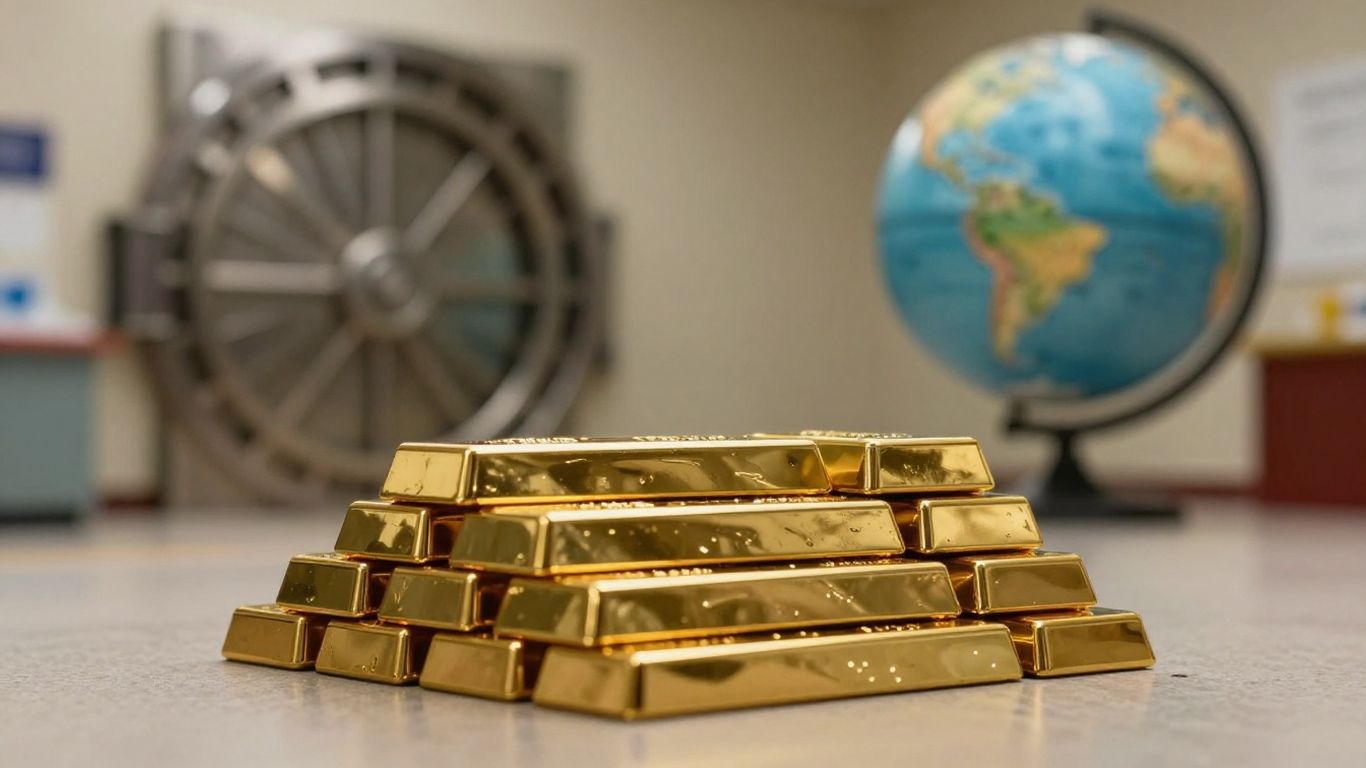
Central banks, the financial institutions that manage a country's monetary policy, are major holders of gold. They see gold as a safe asset, especially when the economy becomes unstable. It's their safety net.
They buy and sell gold for several reasons. Sometimes it's to diversify their reserves, to avoid putting all their eggs in one basket (which is often the dollar or the euro). Other times, it's to adjust their position in the face of world events. The World Gold Council conducts surveys every year to find out what they think about gold and what they plan to do.
Central banks tend to increase their gold reserves when there is economic or geopolitical uncertainty. This is fairly predictable behavior.
Impact on Gold Price
When a central bank buys a lot of gold, it increases demand. And as you know, when demand increases and supply doesn't immediately keep pace, the price tends to rise. It's a bit like when everyone suddenly wants the latest gadget.
Conversely, if a central bank decides to sell some of its reserves, it can cause the price to fall. But be aware that these sales are often planned and announced, so the market has time to react. It's not usually a spur-of-the-moment decision that causes the price to drop.
Buying and Selling Strategies
Central bank strategies are not always easy to decipher. They can buy gold on the open market, through financial institutions, or sometimes even directly from other central banks. These purchases are often made with a long-term perspective, to strengthen their positions.
Here are some key points about their strategies:
- Diversification: Reduce dependence on a single currency.
- Stability: Using gold as a safe-haven asset during times of crisis.
- Liquidity: Gold remains a relatively easy asset to sell if needed.
- Trust : Maintaining a certain amount of gold can provide reassurance about the strength of the economy.
Their role is therefore quite important in understanding the movements of the gold market. They are not minor players, far from it!
Key Data on Gold
Access the Data on Goldhub
Goldhub is an incredibly simple online tool that anyone can use to find the most up-to-date data on the gold market. It serves as a kind of dashboard for investors, whether curious or professional. On this site, you'll find:
- Statistics on global gold production
- Evolution of demand rates (jewelry, pre-investment, industry…)
- Daily, monthly and annual gold prices
- Central bank movements (purchases, sales, reserves)
For everything you need to know about the market situation, this is the place to be. Seriously, even if you're not a financial analyst, you can navigate and generate clear charts in just a few clicks.
Before making a decision to buy or sell gold, taking a look at the latest figures on Goldhub allows you to see the trends and avoid unpleasant surprises.
Understanding Performance Indicators
When we talk about measuring the health of the gold market, we look at some key data:
- Price of the ounce (LBMA tracking): this is the official reference.
- Industrial demand, jewelry, investment: each of these categories has a direct impact on the market.
- Volume of recycled gold: it shows if more gold is being put back on the market (often in reaction to rising prices).
- Central bank purchases: these major players are good indicators of overall sentiment on gold.
And for those who like numbers, here's an overview of the latest key indicators:
| Year | Average price (US$/oz) | Total demand (tonnes) | Mining production (tonnes) |
|---|---|---|---|
| 2022 | 1 800 | 4 741 | 3 612 |
| 2023 | 1 948 | 4 855 | 3 624 |
| 2024 | 2 287 | 4 900 | 3 631 |
Indicators like these figures give you a clear view of what changes each year.
Gold Demand Figures
Gold demand changes every year, but there are always sectors that dominate:
- Jewelry (main demand item)
- Investment (bullion, coins, ETFs)
- Industry (electronics, medicine…)
- Central banks (reserve storage)
Quick overview of recent demand items (in tonnes):
| Post | 2022 | 2023 | 2024* |
|---|---|---|---|
| Jewelry | 2 193 | 2 118 | 2 150 |
| Investments | 1 021 | 1 235 | 1 190 |
| Industry | 326 | 324 | 322 |
| Central banks | 1 201 | 1 178 | 1 238 |
*2024 estimates based on trends at the beginning of the year.
- Demand can explode during periods of economic uncertainty.
- When prices rise, recycling increases (individuals resell).
- Central banks have become increasingly active in recent years.
There you have it, everything you need to follow the gold market, whether you're here out of curiosity or because you have some gold bars in your sights!
Gold is a precious metal that has always fascinated people. Whether you're interested in bars, investment coins, or simply curious about its value, we have the information you need. Discover the basics to fully understand... gold marketTo learn more and start investing, visit our website today!
Conclusion
Okay, so to sum it all up, the World Gold Council reports are like a compass for keeping track of what's happening with gold around the world. They contain figures, trends, analyses—in short, everything you need to understand why gold is still such a hot topic. Whether you're looking to invest, are simply curious, or just want to impress at a party, these reports give a good overview of the market's state. And frankly, given how much gold has skyrocketed in recent years, it's worth taking a look at them from time to time. There you have it, it's really that simple!
